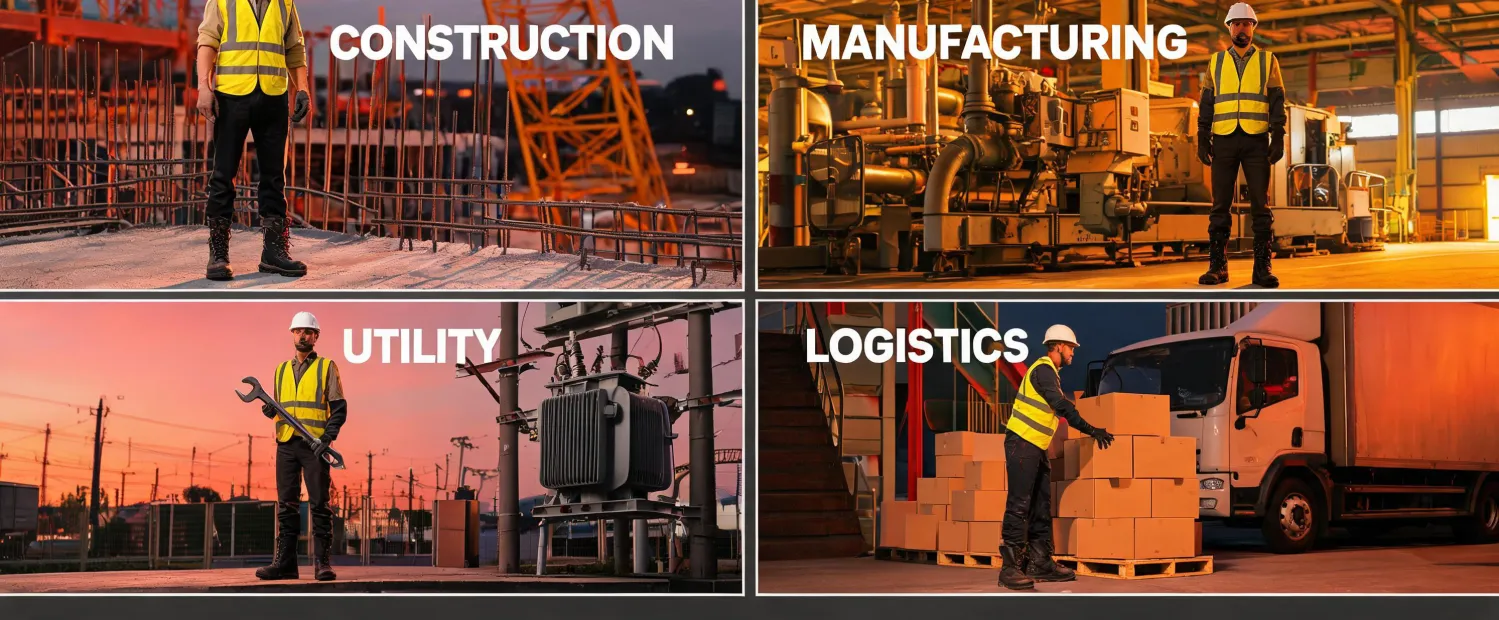
Workers in different industries wearing safety footwear
Guided workplace cards

Timberland PRO footwear guidance by industry and work surface

Every workplace asks different things from safety footwear. The goal is not to force a single model across every job. It is to build a clear, friendly shortlist that matches hazards, comfort, and purchasing discipline.

Two-column detailed cards

Choose the closest workplace profile

Construction and trades

Crews move from concrete to mud, climb ladders, and face dropped-object risk. We usually begin with steel toe or composite toe boots, waterproof options, puncture awareness, ankle support, and traction that can handle uneven ground without making the boot feel punishing.

Plan construction boots

Manufacturing and assembly

Long shifts on hard floors reward lighter footwear, cushioning, and slip-resistant soles. Some areas need ESD awareness or EH markings. The program should separate production floor footwear from outdoor maintenance boots so workers are not carrying unnecessary weight.

Plan manufacturing footwear

Utilities and electrical service

Utility teams often ask for EH rated footwear, insulation decisions, defined boot height, and durable outsoles for truck steps and outdoor surfaces. We confirm the internal safety language before building the quote, because electrical hazard wording needs careful handling.

Plan utility crew boots

Logistics and warehouse

Fast walking, pallet work, dock plates, and seasonal temperature shifts make weight and comfort important. Composite toe safety shoes, slip-resistant outsoles, and easy reorder sizing can reduce friction for new hires and temporary workforce changes.

Plan warehouse footwear

Oil, gas, and field maintenance

Outdoor field teams may need waterproof leather, metatarsal options, aggressive tread, and simple replacement triggers when exposure damages the boot. We help separate occasional visitors from daily field crews so the program stays realistic.

Plan field boots

Facilities and campus operations

Facilities teams handle repair calls, wet floors, electrical rooms, and outdoor walks. A balanced footwear list can include a core EH work boot, a lighter service shoe, and a waterproof option for grounds or winter tasks.

Plan facility footwear
Interactive checklist style

Use these questions before choosing a boot family

The checklist keeps the conversation grounded in real work. It helps procurement, EHS, and supervisors agree on the reason behind each footwear option.

Map your workplace

Let Timberland PRO turn the job profile into a footwear shortlist.

Send the industry, crew count, hazards, and current boot problems. The reply will keep standards references clear and buying steps simple.